


What these Workers & Resources tools do
Workers & Resources: Soviet Republic asks you to plan in tonnes per day. A food factory wants 42 t of crops every day, a steel mill burns through 357 t of coal, and a city of 20,000 people eats about 6.8 t of food a day on the player-reported average. Each building's figures sit on their own wiki page; these tools put them side by side and add whole chains up.
- Production chain calculator. Pick any good the official wiki has full figures for (food, alcohol, clothes, fabric, chemicals, plastics, gravel, cement, concrete, prefab panels, asphalt, bricks, coal, iron, steel, mechanical components, fuel, boards, nuclear fuel and more), type a daily target, and get every building back to the mine, quarry or field, with workers, power, water and a diagram of the chain. Tick any input to import it instead.
- Citizen consumption calculator. Enter a population and get daily and yearly food, meat, clothes, alcohol and electronics demand, how many factories that means, and what your chosen housing draws in power and water.
- Power and heating calculator. Turn a demand in MWh per day (and heat in GJ per day) into coal, gas, solar, wind or nuclear plants, with the fuel they burn.
- Reference tables. Every production building with workers, inputs, outputs, power and water, and every good with what makes it, what uses it and how it is stored and moved.
- Guides. Best starting industry, farm setup and how many factories per citizen.
The main production chains
Most of a republic's economy hangs off four chains. Every box links to the building's row in the reference table, and every number is per building per day at full staffing.
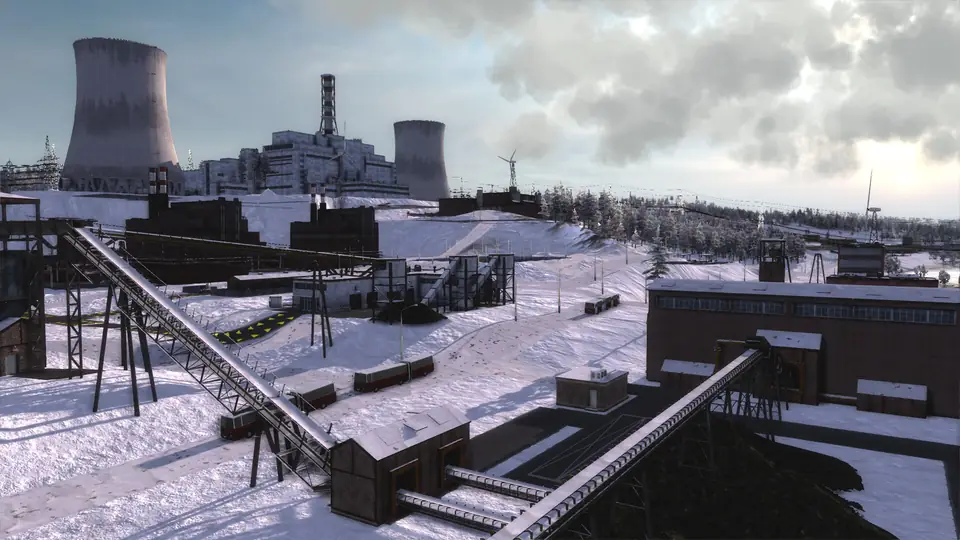
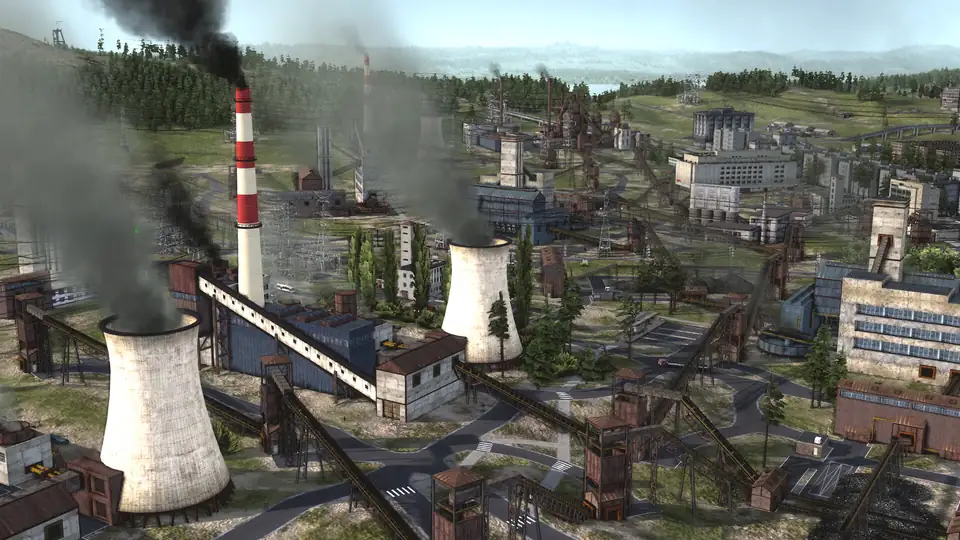
Steel is the heaviest: a mill takes 200 t of iron and 357 t of coal a day, so it needs mines, two processing plants and a lot of rail.
Construction materials all start at a gravel quarry. Gravel goes into cement, then cement and more gravel into concrete and prefab panels.
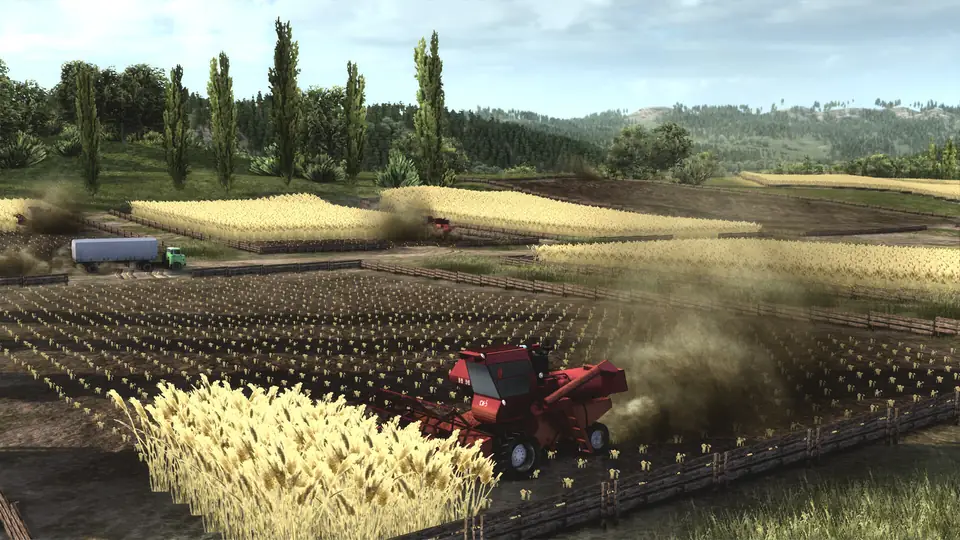
Crops feed the food factory, distillery, fabric factory and livestock farm. The farm setup guide works out how many fields each one needs.
Oil gives fuel and bitumen together from the refinery, and bitumen plus gravel makes asphalt for roads.
Where the numbers come from
Building figures (workers, daily output, daily input, power and water) come from the official Workers & Resources wiki run by Hooded Horse, from pages last edited in August 2026. The wiki lists the current game version as 1.1.1.7 (June 2026). Citizen consumption comes from player-reported yearly totals for a republic of 109,478 citizens, summarised on the Steam forum. Every page lists its sources at the bottom, and every building row in the chain calculator links to its wiki page. Building and resource icons are from the same wiki under CC BY-SA 4.0.
Where the wiki has no figure (the slaughterhouse, the electronics factory, the pumpjack's crew, the plastics factory's power use), the tools leave it blank rather than guess. All figures assume full staffing. Real buildings run below that when shifts are short of workers, so build one more than the exact number when in doubt.
The other chains (clothes, chemicals and plastics, nuclear fuel) are drawn on the guide and calculator pages they belong to.
Questions
What is Workers & Resources: Soviet Republic?
A city builder and economic simulation by 3Division, published by Hooded Horse, where you build a Soviet-era republic from the ground up: every building needs workers and materials delivered by your own vehicles, and every good has a production chain behind it.
Are these figures for the current version?
They come from official wiki pages last edited in August 2026, when the wiki listed version 1.1.1.7. If a building's info window in your game shows a different number, the game is right.
Where should a new player start?
Read the best starting industry guide, then size your first chain in the production chain calculator with its inputs imported.
Why are some goods missing from the calculator?
Meat, electronics, electronic components, aluminium and explosives are not offered because the wiki does not list complete input and output figures for the buildings that make them.